


14 Wall Paint Design Ideas for Your Home
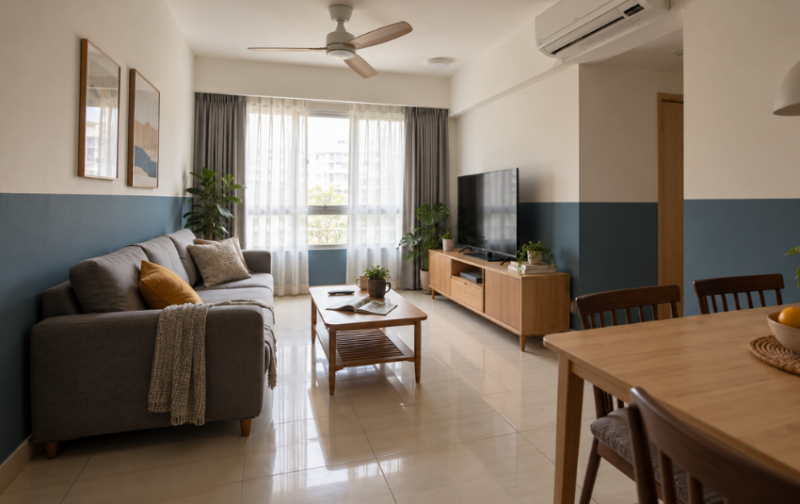
Wall paint design goes beyond choosing a colour. Painted shapes can frame furniture, while textured and metallic finishes add depth to a room. Even something as simple as dividing a wall into two colours can completely change how a space looks and feels. It’s all about finding a design that works with your furniture, complements your style and brings a little more personality into your home.
If you’re thinking of giving your walls a makeover, here are 14 wall paint design ideas to inspire you, from simple two-toned walls and painted arches to bold patterns and textured feature walls.
Key Takeaways:
|
14 Wall Paint Design Ideas
1. Colour-Drenched Walls and Ceilings
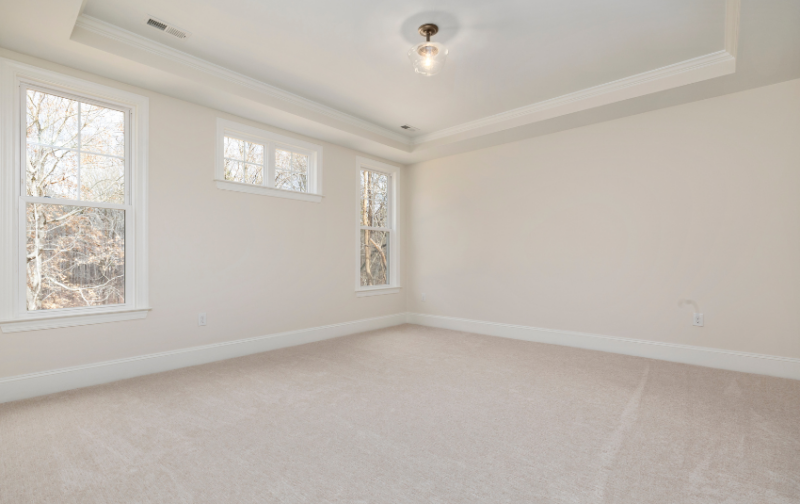
Colour drenching extends one shade across the walls and ceiling, giving architectural features a more integrated look. Lighter colours feel airy, while deeper tones create an intimate, dramatic atmosphere. This approach works well in bedrooms, studies and dining spaces.
How to achieve it: Choose suitable wall and ceiling coatings in the same colour. Paint the ceiling first, then the walls, following each product’s preparation and drying instructions.
2. Simple Accent Walls
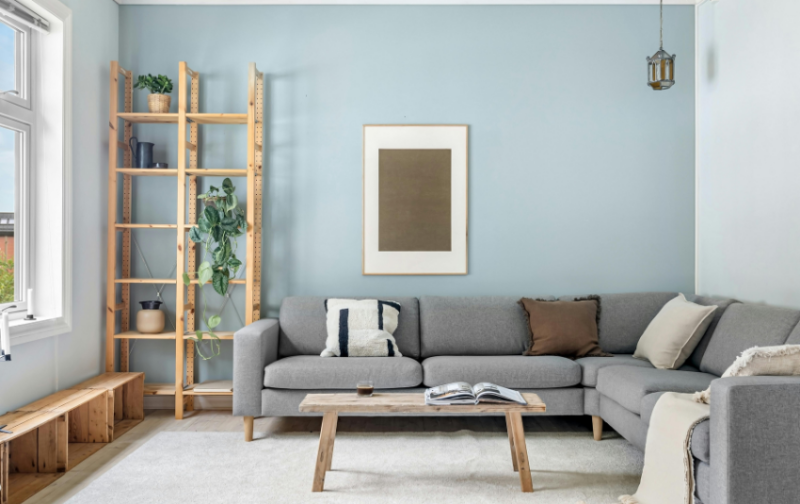
One contrasting wall creates a focal point and offers an easy refresh. Choose a surface behind a bed, sofa or television, or frame a dining area. A stronger colour stands out against neutrals, while a deeper shade from the existing palette feels subtler.
How to achieve it: Tape the adjoining edges, cut in around the perimeter with a brush and roll the main area. Apply the recommended coats for even coverage.
3. Two-Toned Wall Paint Design
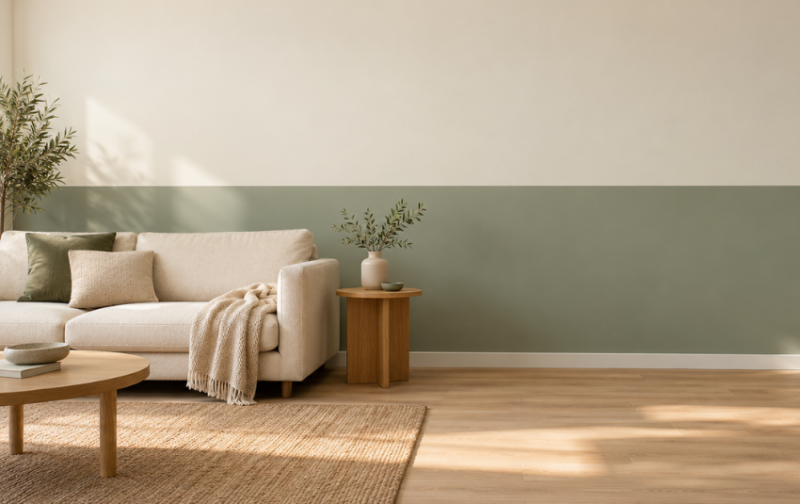
A two-toned wall adds interest without a pattern or texture. Try a darker shade below and a lighter shade above to anchor a bed or sofa. Related shades create a subtle look, while contrasting colours make a bolder statement.
How to achieve it: Mark a level dividing line and tape the boundary using painter’s tape. Paint each section separately, letting the first colour dry sufficiently before masking the adjoining area.
4. Striped Wall Paint Designs
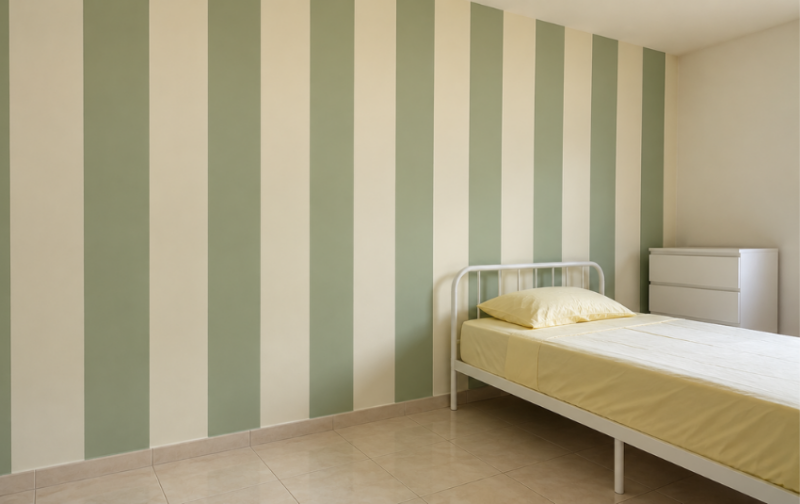
Vertical stripes emphasise height, while horizontal stripes draw the eye across the wall. Diagonal lines add movement to a feature area. Wide stripes in related shades create a subtle backdrop, while narrower, contrasting stripes give the room a more playful character.
How to achieve it: Measure the widths and mark lines with a spirit level. Tape the boundaries, paint the accent stripes in thin coats and follow the tape manufacturer’s removal instructions.
5. Colour Blocking
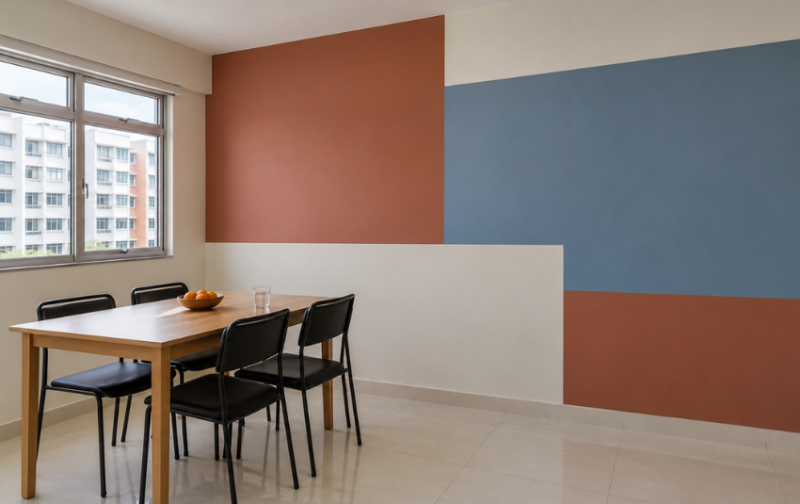
Blocks of complementary or contrasting colours turn a plain wall into a contemporary feature. Experiment with rectangles, circles or irregular curves to frame furniture or define an area. Colour blocking suits living rooms and bedrooms, as well as studies and creative spaces. Repeat a shade from your furnishings to connect the design with the room.
How to achieve it: Sketch the arrangement on paper, then lightly mark the shapes on the wall. Tape straight edges and use a small brush to outline curves before filling the larger areas with a roller.
6. Chevron Wall Paint Designs
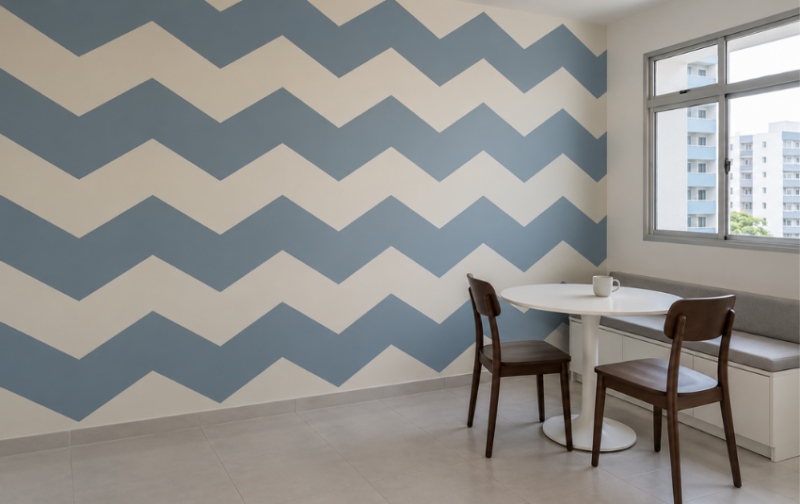
Chevron’s repeating V-shaped pattern adds a bold, graphic feature to a child’s room or home office. Broad chevrons feel less crowded than small zigzags. Keep the palette restrained if your furniture or fabrics already have strong patterns.
How to achieve it: Sketch the zigzag, then mark a grid and equal angles with a ruler and level. Tape the pattern, paint the open sections and follow the tape’s removal instructions.
7. Painted Arches
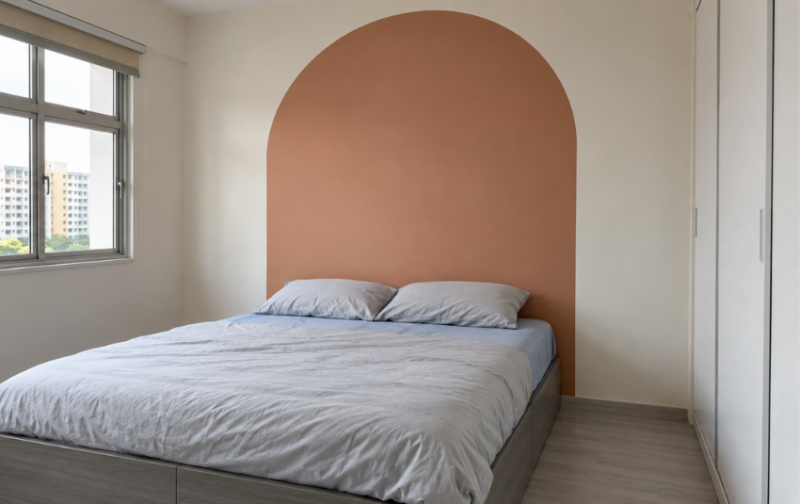
A painted arch adds an architectural focal point behind a bed, sofa or desk, or around shelving and reading corners. Size it to suit the furniture. Tonal colours keep the effect subtle, while contrasting shades create a stronger frame.
How to achieve it: Mark two points at the same height and draw vertical sides below them. Anchor a string halfway between the points, with its length set to half the arch’s width, and use the attached pencil to trace the semicircle. Mask the straight edges, outline the curve with a brush and fill in the shape.
8. Geometric Wall Paint Designs
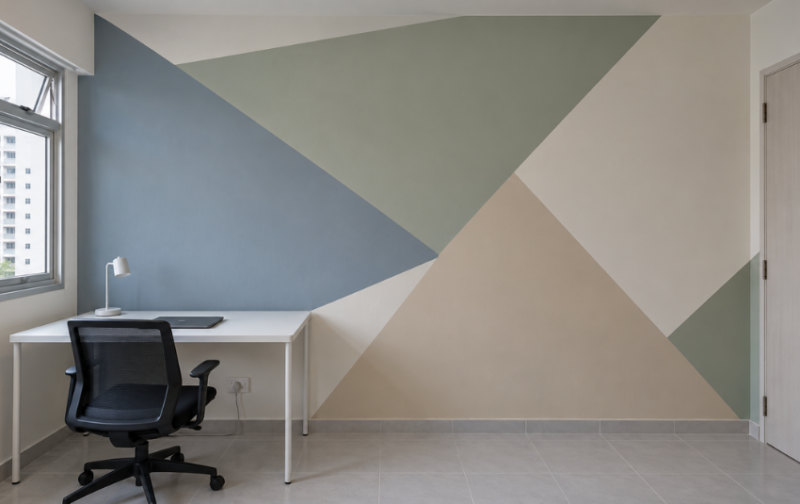
Triangles, squares and diagonal lines create a structured, modern feature wall or a playful backdrop in a child’s room. Keep the palette cohesive when combining several shapes, and consider larger sections to avoid an overly busy design.
How to achieve it: Draw the layout first, then use a ruler and spirit level to transfer it to the wall. Tape the boundaries and paint the sections, allowing each colour to dry sufficiently before masking any adjoining areas.
9. Abstract or Freeform Wall Designs
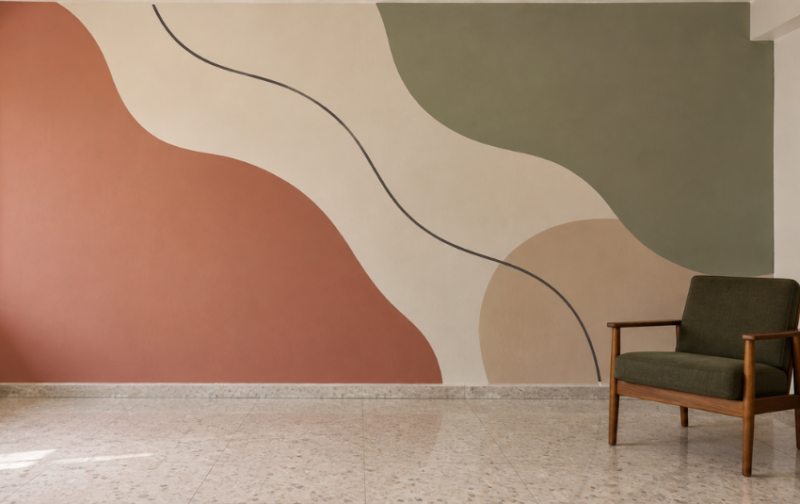
Sweeping brushstrokes and curved shapes create a personal mural in a living room or creative studio. Draw colours from existing furnishings and leave some open wall space between shapes. Step back regularly to check the composition’s balance.
How to achieve it: Start with a dry base coat and lightly sketch the main shapes. Build the design with different brush sizes, allowing layers to dry where you want clear edges.
10. Ombre / Gradient Walls
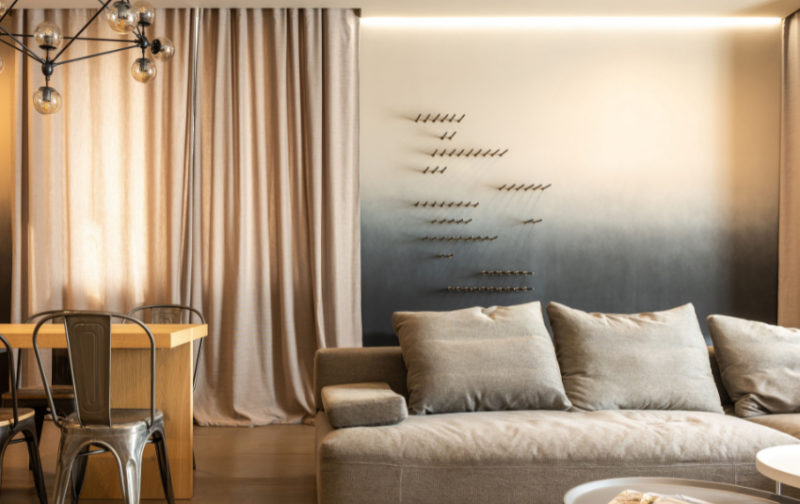
Ombre blends shades gradually into one another. Soft tonal gradients create a calming bedroom backdrop, while stronger contrasts add drama to a feature wall in a creative space. Choose shades from the same colour family for an easier, more cohesive blend.
How to achieve it: Apply the colours in adjoining bands and blend their overlap with a clean brush while both are still wet. Work in manageable sections so the paint stays workable, softening each transition before moving on.
11. Subtle Textured Walls
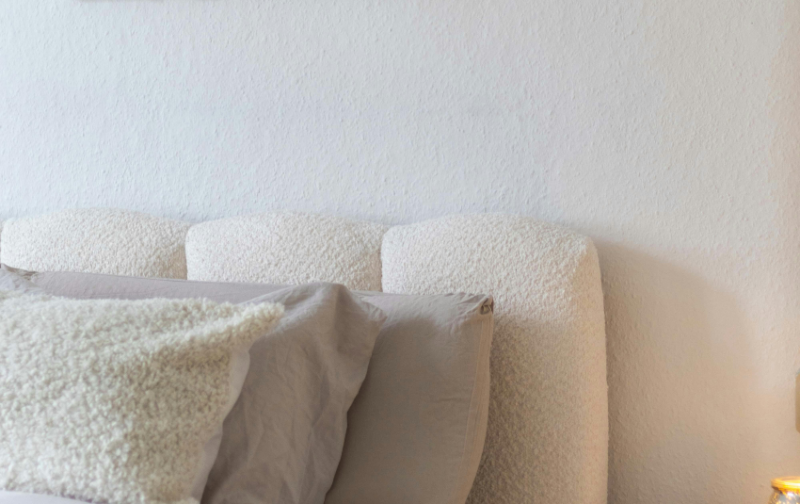
For a more understated look, Nippon Paint’s Momento® Minimalist series brings subtle textures and graceful finishes to interior walls. Its Nature Touch finish offers tactile richness with patterns inspired by tangerine skin, crocodile skin and flowing streams, while pearlescent effects add a gentle shimmer. These finishes work well in living rooms, bedrooms and feature walls where you want to introduce visual interest without overwhelming the space.
How to achieve it: Prepare and prime the surface according to Nippon Paint’s recommendations. Apply the recommended base coat and use the appropriate tools and application techniques to create your chosen pattern. Allow each coat to dry as directed and follow the product instructions for any finishing coats.
12. Soft Pearlescent Wall Finishes
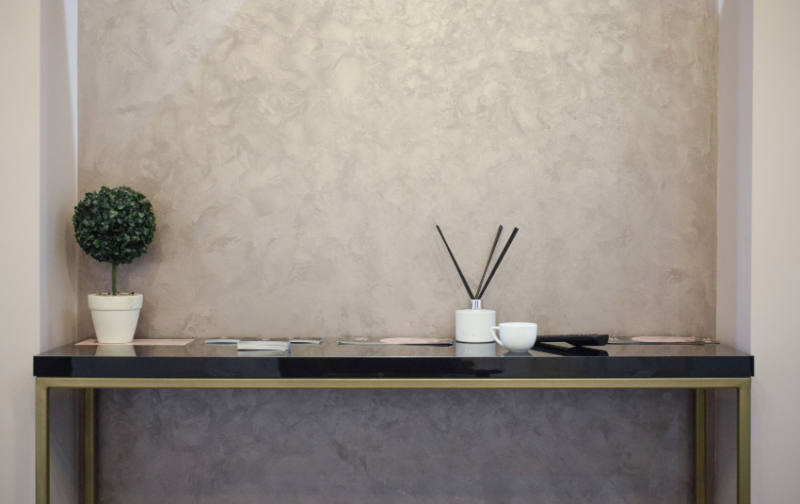
A soft pearlescent glow can give a bedroom or living room an airy feel. Nippon Paint Momento® Pearly Shell creates a luminous finish that gently catches the changing light, adding subtle depth and dimension to the walls.
How to achieve it: Prepare and prime the surface according to the recommendations. Apply your chosen base colour and allow it to dry completely. Then, glaze over the surface with Pearly Shell using a brush to bring out the soft, pearlescent finish.
13. Brick and Stone-Inspired Wall Designs
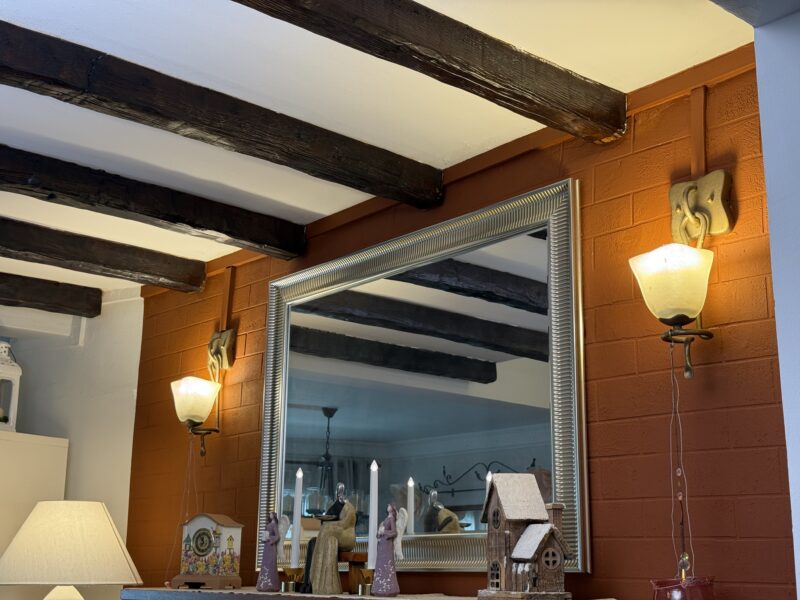
Brick and stone effects add character to rustic or industrial interiors and relaxed, nature-inspired spaces. A brick stamp creates the painted pattern of brickwork, while textured coatings give minimalist rooms a more tactile focal point.
Nippon Paint Momento® Travertino recreates the natural, sandy appearance of travertine. Its textured intermediate coating can be shaped or carved to add dimension before finishing with a compatible topcoat.
How to achieve it: Stamp a brick-shaped sponge over a dry base coat, offsetting rows and leaving mortar gaps. For stone effects, apply Travertino with a trowel, shape the texture and complete the recommended coating system.
14. Industrial-Inspired Wall Finish
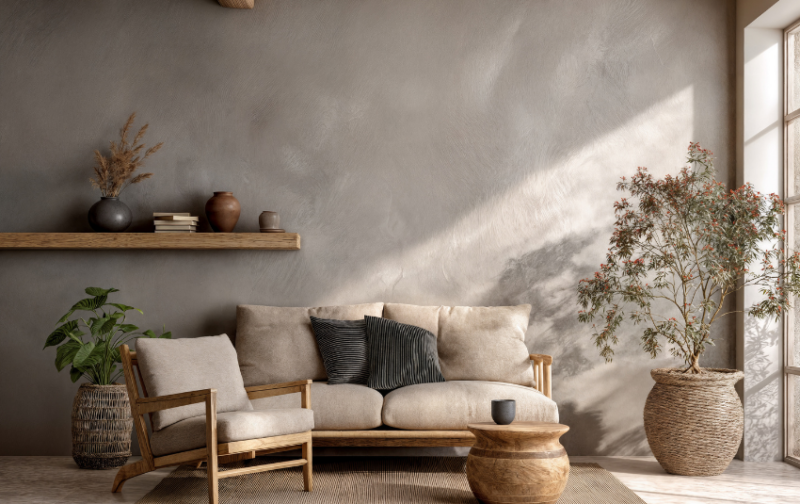
Industrial-inspired finishes bring a raw, understated character to interiors, adding depth and texture without overwhelming the space. Concrete-like surfaces create a contemporary look that works well in minimalist living rooms, bedrooms and feature walls.
For this effect, Nippon Paint’s Momento® Cemento recreates the natural variations and textured appearance of cement. Pair it with warm wood accents and neutral furnishings to soften the industrial feel.
How to achieve it: Prepare the wall and apply the recommended Cemento primer. Using a trowel, apply two to three coats of Momento® Cemento Texture. Allow sufficient drying time between coats before finishing with the recommended clear coat for added protection.
How to Choose the Right Wall Paint Design for Your Room
Room size
Use lighter colours and simple designs in compact rooms. A painted arch or accent wall creates a focal point without crowding the space. For repeating patterns, choose larger shapes and leave enough visible wall around the furniture.
Natural lighting
Nippon Paint’s Colour Visualizer app can help you shortlist colours using a photograph of your room. Confirm your choice with a physical sample, viewed in daylight and under evening lighting. Check decorative finishes from several angles to assess their texture or shimmer.
Existing furniture
Use your sofa and flooring as starting points for the wall palette. Cream or earthy colours complement warm timber, while blue-grey can suit cooler furnishings. Keep wall designs simpler if the upholstery is already patterned.
Purpose of the room
Match the design to how the room is used. These examples suggest options for a calm bedroom or a more expressive living space:
| Room | Design to Consider | How It Can Work |
| 卧室 | Painted arch or soft ombre | Frame the bed or create a gentle colour transition behind the headboard |
| Living room | Subtle or industrial-inspired feature walls | Add a focal point while keeping neighbouring walls and furnishings simple |
| 书房 | Colour blocking or colour drenching | Define the desk area or create a consistent backdrop across the room |
| Children’s room | Wide stripes or geometric shapes | Introduce a playful pattern using a manageable palette and a washable wall paint |
Maintenance
For busy living areas and hallways, EasyWash & Clean Low Sheen offers a washable, durable finish that resists household marks and stains. Decorative coatings have specific care requirements, so check their recommended cleaning methods. Our guide on how to paint a room covers paint selection and preparation.
Tips For Painting Wall Patterns Successfully
Once you have chosen the design, careful preparation helps you translate it onto the wall. Keep these practical points in mind:
- Start with a clean, dry surface: Remove loose paint and repair uneven areas before painting. Where the coating system calls for a sealer, Odour-less Ultra 5102 Sealer is an option for suitable masonry surfaces. Momento® finishes require their specified preparation and primer system.
- Use suitable painter’s tape: Choose tape suited to the surface and check how long fresh paint must dry before masking. Press the edges firmly, apply light coats and follow the tape manufacturer’s removal instructions.
- Plan and measure first: Sketch the layout and check lines with a level. Account for tape width when spacing stripes or chevrons.
- Test the colours and technique: Practise on a sample board and check the dried result under the room’s lighting before painting the wall.
- Work in good lighting: Use consistent lighting to spot missed areas or uneven lines. Inspect the design close up and from a distance.
- Allow sufficient drying time: Follow recoating times and ventilate during painting and drying. Blend ombre colours while wet, but let base coats dry sufficiently before masking.
For a fuller preparation checklist, see our guide on how to prepare your home for painting.
Bring Your Wall Paint Design to Life
A well-chosen wall design can frame your furniture or give an ordinary room a more distinctive look. Start with the effect you want, then choose colours and a finish that suit the space and its everyday use.
Explore Nippon Paint’s paint colours to plan your palette. For help with colour selection and application, enquire about our 专业油漆服务 and request a quotation for your project.
FAQs About Wall Paint Designs
What wall paint design makes a room look bigger?
Lighter colours and simple designs can help a room feel more open. Vertical stripes draw the eye upwards, while horizontal stripes emphasise width. A subtle two-toned design can also add interest without overwhelming a compact room. Keep the effect balanced with the furniture layout and available light.
Which wall is best for a feature wall?
Choose a wall that naturally draws attention, such as the wall behind a bed, sofa or dining table. A broad surface with fewer doors and windows gives a pattern more room to stand out. Check how much of the design will remain visible once the furniture is in place.
How many colours should I use in a wall paint design?
Start with two or three colours: one base shade and one or two accents. Abstract designs can use more, but repeating colours from your furnishings helps keep the room cohesive.
What colours make a room feel brighter?
White and pale shades such as cream or soft pastels can help a room feel brighter by reflecting more of the available light. Consider the undertone as well: a warm white may suit a shaded room, while a cooler shade can balance strong sunlight. Test the colour under your actual lighting.
Should wall paint match the furniture?
Coordinate wall paint with your furniture rather than matching it exactly. Use related shades for a softer look or contrast to highlight a piece, keeping larger surfaces such as flooring in mind.
What is the easiest wall pattern to paint?
Simple, wide stripes are a good starting point because they use straight lines and a small number of colours. A two-toned wall is another manageable option with only one dividing line. Careful measuring and firmly applied painter’s tape make both designs easier to achieve neatly.
Do I need special paint for patterned walls?
Standard interior wall paint works for most designs made with colour, including stripes and painted arches. Raised textured finishes need a suitable decorative coating, such as a Momento® product. Choose the coating for the effect you want and follow its recommended preparation and application system.
How do I prevent paint from bleeding under painter’s tape?
Apply suitable tape to a clean, dry surface and press its edges firmly. For a sharper boundary, paint a thin layer of the base wall colour along the tape edge and let it dry before applying the accent colour. Use light coats rather than allowing paint to pool against the tape.
How long does a patterned paint wall last?
Nippon Paint recommends repainting your walls every five to seven years, although busy areas may need repainting sooner. Preparation and the coating affect durability, as do moisture exposure and cleaning.
How to Paint Wood: 8 Steps For A Smooth, Lasting Finish