


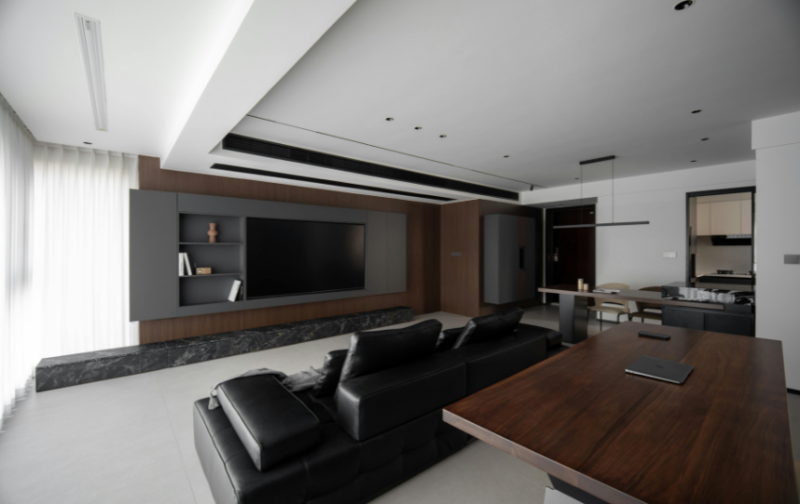
Your ceiling design helps set the mood of a room. A blue painted ceiling brings a relaxed feel to a bedroom, while recessed details and soft lighting add depth to a living room. Even a simple colour change overhead can refresh the space.
Whether you are planning a renovation or refreshing an existing space, there are options to suit different room sizes and budgets. Explore these 11 ceiling design ideas, along with tips on choosing colours and planning ceiling works for your Singapore home.
Key Takeaways:
|
11 Ceiling Design Ideas For Your Home
From a simple colour change to architectural details, these ideas offer different ways to make your ceiling part of the room’s design.
1. Simple Minimalist Ceiling Designs
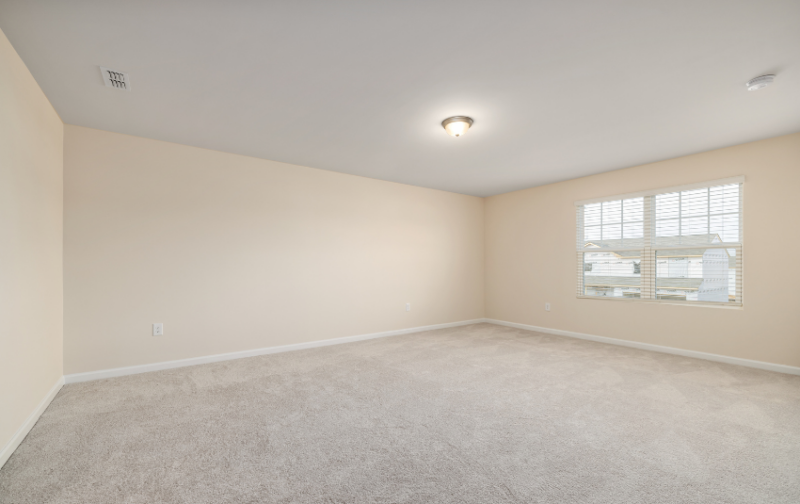
A white, off-white or pale neutral ceiling with simple lighting can help a smaller room feel brighter and more open. This approach suits minimalist interiors where the furniture or a feature wall provides the main detail. Choose a ceiling shade that works with the undertones of the walls, especially when combining different whites.
Odour-less Anti-Mould Ceiling White is a matt paint with anti-mould properties formulated for interior masonry ceilings. It can be used in moisture-prone areas such as kitchens and bathrooms, with proper surface preparation and adequate ventilation.
2. Contrasting Ceiling Designs
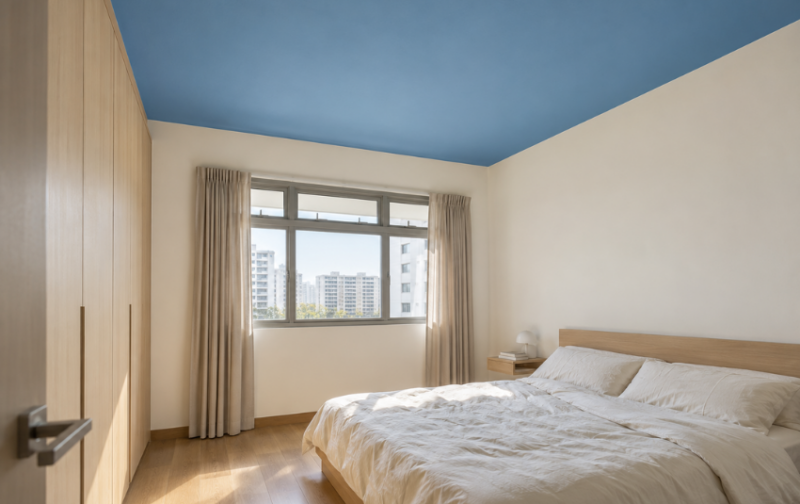
Using a contrasting colour on your ceiling is a simple way to add visual interest without making structural changes. Instead of matching your ceiling to the walls, choose a different shade to create contrast and draw the eye upwards.
For a beach-inspired bedroom, try Nippon Paint’s Blue Madonna (NP PB 1555 D) with white walls and light wood furniture. The blue creates a refreshing contrast overhead while keeping the rest of the room light and airy.
For something warmer, Azuki Coffee (NP N 1862 A) works as an accent above a bed or dining table. Leave the surrounding ceiling white to define the painted area, and align it with the furniture below for a more cohesive look.
3. Dark and Moody Ceiling Designs
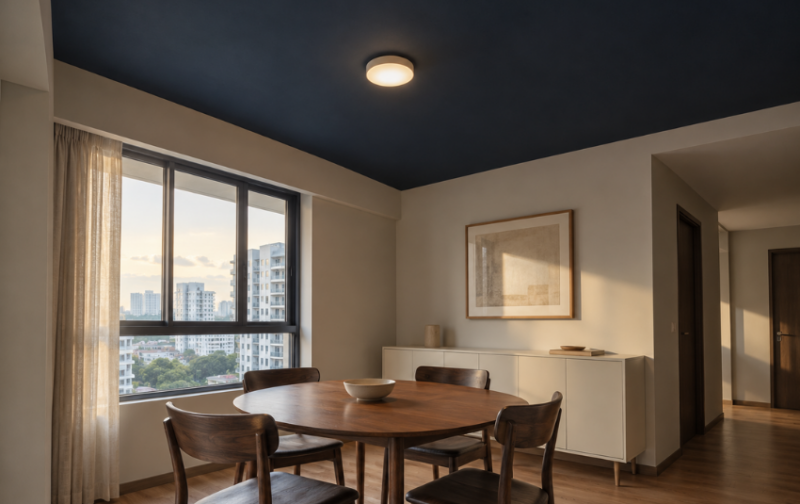
Black, charcoal, navy and dark brown can create a cosy, enclosed feel, particularly in bedrooms or dining areas. Pair a dark ceiling with lighter walls and furnishings to balance its visual weight. In rooms with limited daylight, check the effect under your evening lighting before committing to the whole ceiling.
Consider Black Magic (NP N 1988 A) for a bold ceiling, or pair Crater Black (NP N 2030 A) with warm wood furnishings. Keep other large surfaces relatively simple so the ceiling remains the focal point.
4. Patterned and Geometric Ceiling Designs
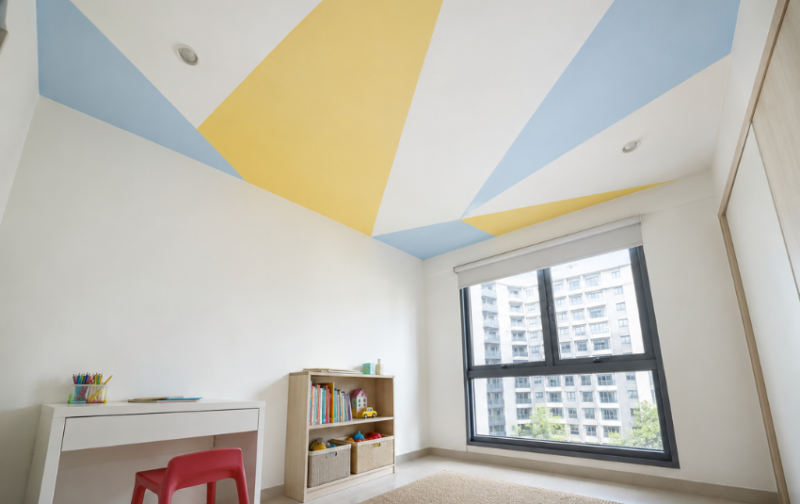
Stripes, painted borders and geometric shapes can give a flat ceiling a playful finish. In a child’s bedroom, alternating white sections with Sun Miracle (NP YO 1107 D) adds a cheerful yellow accent. Lines that meet at the centre can create a canopy-like pattern, while a border offers a subtler option for a study. Keep the palette limited and plan the pattern around light fittings so the design looks deliberate rather than crowded.
5. Metallic and Textured Ceiling Designs
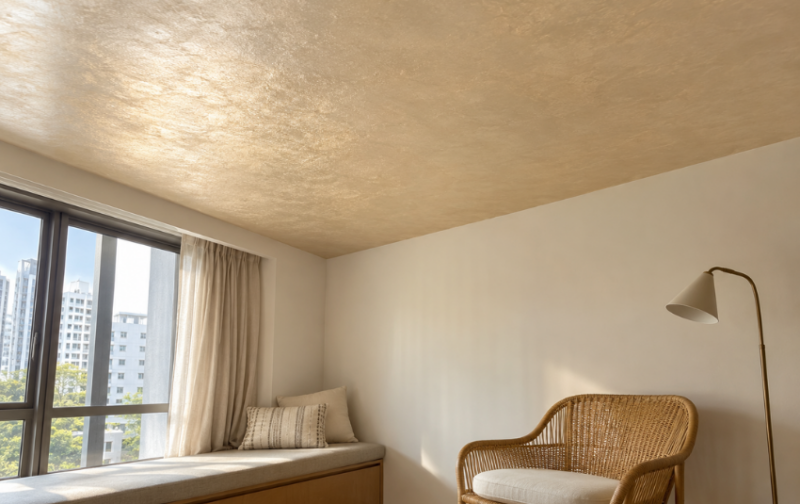
Metallic and textured finishes can add depth and character to your ceiling, especially as light moves across the surface. Nippon Paint’s Interior Textures series offers a range of textured finishes that can create different visual effects.
For a soft, pearlescent glow, Nippon Paint’s Momento® Pearly Shell creates a luminous textured finish that works well in bedrooms and living rooms. Meanwhile, Momento® Minimalist – Nature Touch brings tactile richness and a more dramatic presence through its textured appearance.
Lighting matters here: light directed across the surface can emphasise texture, while reflective finishes may create glare near exposed bulbs. Check a sample under the intended lighting, and confirm with your paint supplier which special-effect coating and application method are suitable for your ceiling material.
6. Cove Ceiling Designs
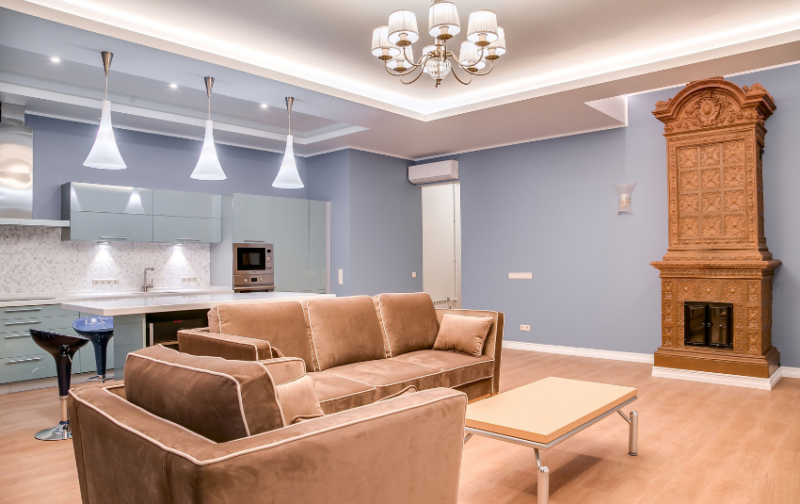
A cove ceiling design uses a concealed ledge or recess, often around the room’s edges, to house indirect lighting. The light washes across the ceiling, creating a soft glow suited to contemporary Singapore living rooms and bedrooms.
Warm lighting can bring out cream or beige tones, while cooler lighting can change how the same paint colour appears. Choose the lighting and ceiling colour together, and supplement the ambient glow with task lighting where you need it.
7. Tray, Recessed and Coffered Ceiling Designs
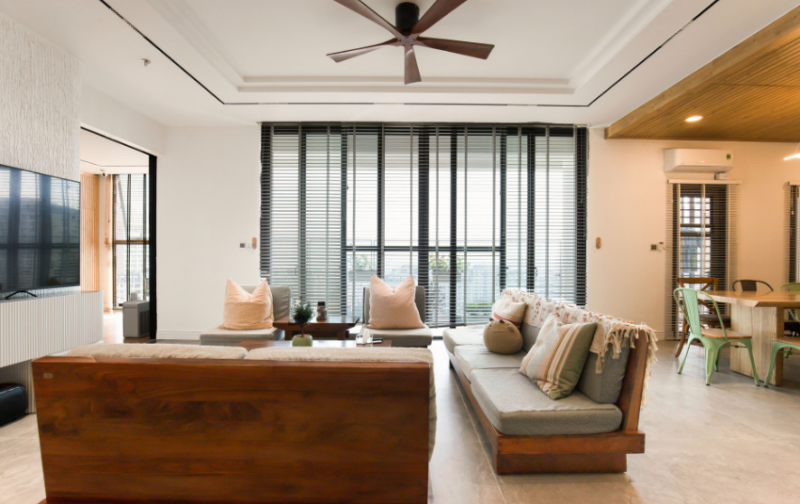
These designs introduce depth through different ceiling levels. A tray ceiling usually has one higher central section framed by a lower perimeter; a coffered ceiling has a grid of recessed panels defined by beams or mouldings. Other recessed designs may use a single inset above a seating or dining area. Painting the raised or inset section a different colour highlights its shape. Closely related shades let the change in level stand out without a strong colour contrast.
8. False Ceiling Designs
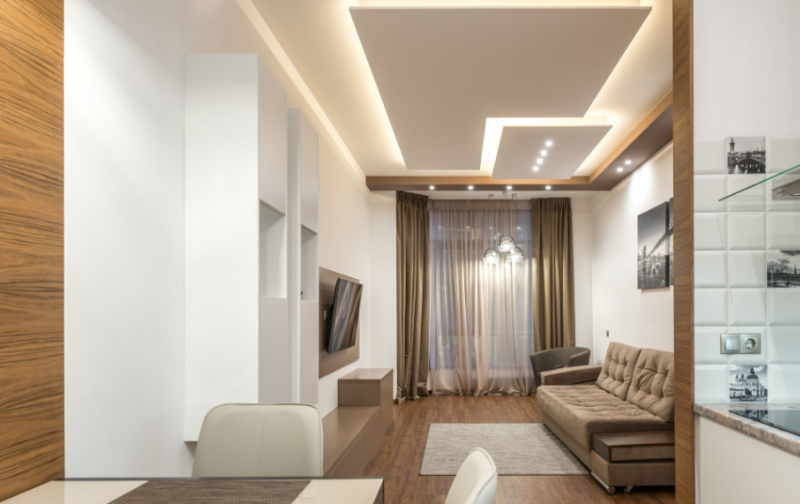
A false ceiling is a secondary surface installed below the original ceiling to conceal wiring or other services and accommodate recessed lighting. A full false ceiling covers the room, while a partial design covers selected areas, such as the perimeter or a section above the dining table.
Partial designs can leave the centre at its original height, which may suit smaller Singapore homes. Check the space required for fittings before deciding how far the new ceiling should drop.
9. Wood and Beam Ceiling Designs
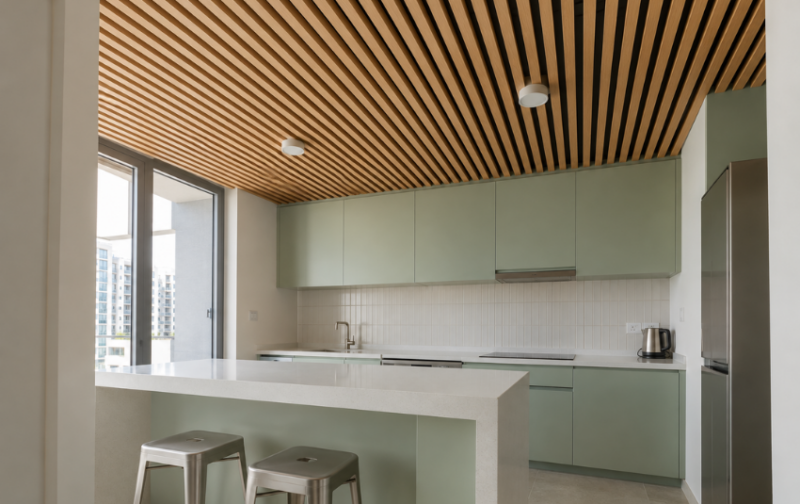
Timber panels, wood-look finishes and decorative beams add warmth overhead. Light wood can complement a Scandinavian interior, while darker beams suit a more rustic setting. Pair the ceiling with cream or muted neutral walls to let the grain stand out. If a fully panelled ceiling feels too dominant, use spaced battens or a few decorative beams against a painted background. Your installer should confirm that the chosen material and fixing method are suitable for overhead use.
10. Industrial Exposed Ceiling Designs
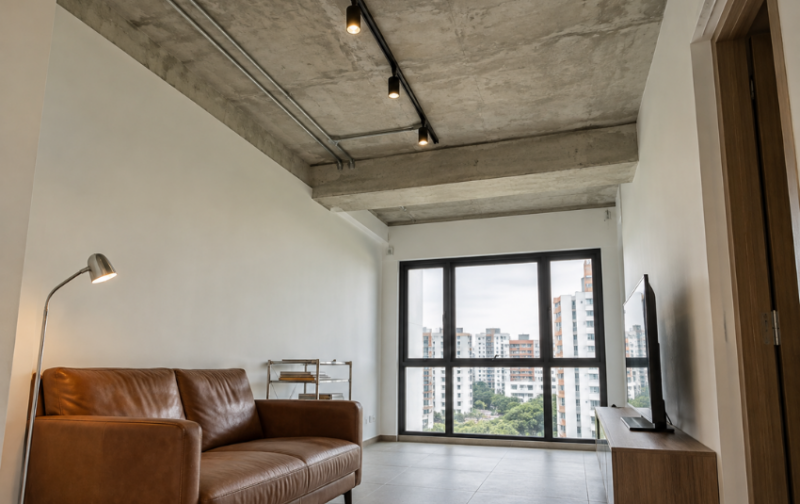
Visible pipes, ducts and structural elements can form part of an industrial interior. Painting compatible surfaces in a consistent colour helps the exposed ceiling look intentional: white keeps the arrangement visually light, while charcoal gives it a stronger presence. Choose coatings suited to each material. Keep equipment labels visible and leave components unpainted where their specifications require it. Exposed services also need regular cleaning and access for maintenance, so consider how the layout will be cared for over time.
11. Artistic and Themed Ceiling Designs
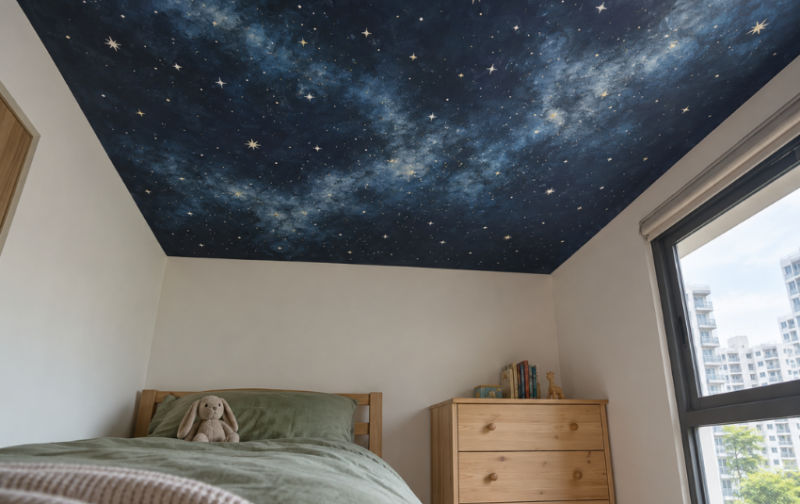
A mural can turn the ceiling into a focal point, with cloud illustrations or a galaxy theme particularly suited to children’s rooms. For a starry-night effect, layer deep blue with softer blue-grey areas, then add scattered stars in different sizes. Sun Glint (NP OW 1013 P) offers a pale accent for painted stars; ordinary paint will not glow in the dark. For a glow-in-the-dark version, explore Nippon Paint’s galaxy ceiling tutorial which uses phosphorescent paint.
How to Choose the Right Ceiling Design
Narrow down your options by considering how the ceiling will work with the rest of the room:
- Room proportions: Match the scale of the design to the space. A large grid of coffers may overwhelm a compact room.
- Room use: Choose softer lighting for a bedroom and sufficient task lighting for a kitchen or study.
- Existing interior: Take cues from the furniture and flooring. Repeat a colour or material to connect the ceiling with the room below.
- Extent of the update: Decide whether repainting can create the feature you want or whether additional ceiling work is needed.
Practical Considerations for Ceiling Designs in Singapore Homes
Before finalising your design, check how it will fit around existing services and the available ceiling height.
Ceiling Height
Measure the existing height before adding false ceilings or layered details. Ask your contractor to show the finished height after installation. In lower rooms, a partial false ceiling can preserve the original height in the centre.
Air-Conditioning
Plan the ceiling and air-conditioning layout together, especially for cassette or concealed ducted systems. Allow space for the units, ducts and drainage, and have your installer confirm the clearance required for the chosen system.
Renovation Guidelines
For an HDB flat, refer to HDB’s current renovation guidelines before planning ceiling works. Confirm the applicable conditions, contractor requirements and any necessary approvals before work begins. For a condominium, check the management’s renovation requirements with your contractor.
Maintenance Access
Keep concealed air-conditioning components, wiring and plumbing accessible. Include access panels wherever servicing is required, and agree their positions before construction so they are discreet but easy to reach.
Budget
Request an itemised quotation covering the ceiling structure, materials, lighting, electrical work and finishing. Comparing the full scope makes costs easier to assess. If the existing ceiling is sound, a painted design may offer a simpler update.
Transform Your Ceiling with Colour
A ceiling can become a feature with a single paint colour, or complement architectural details with a more subtle finish. Start with the effect you want, then choose a coating suited to the surface.
Browse Nippon Paint’s colour range to shortlist shades for your ceiling. For help choosing the paint system and applying the finish, enquire about Nippon Paint’s 专业油漆服务.
FAQs About Ceiling Designs
What ceiling design is best for a living room?
A simple painted ceiling suits a compact living room, while a partial false ceiling with cove lighting can add softer ambient light. In a larger room with sufficient height, a tray or coffered design can provide more architectural detail. Choose according to the room’s proportions and lighting needs.
What ceiling design can make a room look bigger?
A light-coloured ceiling with minimal detailing can help a room feel more open. Keeping the ceiling and walls in similar pale tones can also soften the boundary between them. Avoid bulky ceiling features in low rooms, and use an even lighting scheme to reduce dark corners.
Should ceilings always be painted white?
No. White is a versatile choice, but a coloured ceiling can introduce warmth or a focal point. Pale blue offers a softer alternative, while brown or navy can create a more enclosed feel. Consider how much attention you want the ceiling to draw within the overall scheme.
Should the ceiling be lighter or darker than the walls?
A lighter ceiling often helps a room feel taller, while a darker one can make it feel more intimate. Matching the ceiling to the walls creates a more continuous look. The right approach depends on the room’s height and the atmosphere you want to create.
How can I use different ceiling designs throughout my home?
Vary the designs according to each room’s function, while repeating a colour or detail to keep them connected. For example, use cove lighting in the living room and a simple painted ceiling in the bedrooms, with the same warm neutral shade carried through both spaces.
How do I choose a ceiling colour?
Compare your shortlisted shades with the walls, flooring and larger furniture pieces. View painted samples in daylight and under the lights you will use at night. Position a sample board overhead where possible, as a colour may look different on the ceiling than on a vertical wall.
How to Paint a Ceiling in 6 Easy Steps | Nippon Paint