
Can you paint patterns on walls yourself?
Yes — and it’s easier than most people expect. While a plain wall with a solid colour is the most common approach, adding a painted pattern is one of the most cost-effective ways to give a room genuine personality without a full renovation. All you need are a few basic tools, the right technique, and a little patience.
In 2026, patterned walls are having a significant moment — from the textured richness of limewash and cement effects to the graphic confidence of bold geometric designs. Here are six wall patterns you can realistically achieve at home, from beginner-friendly to more adventurous.
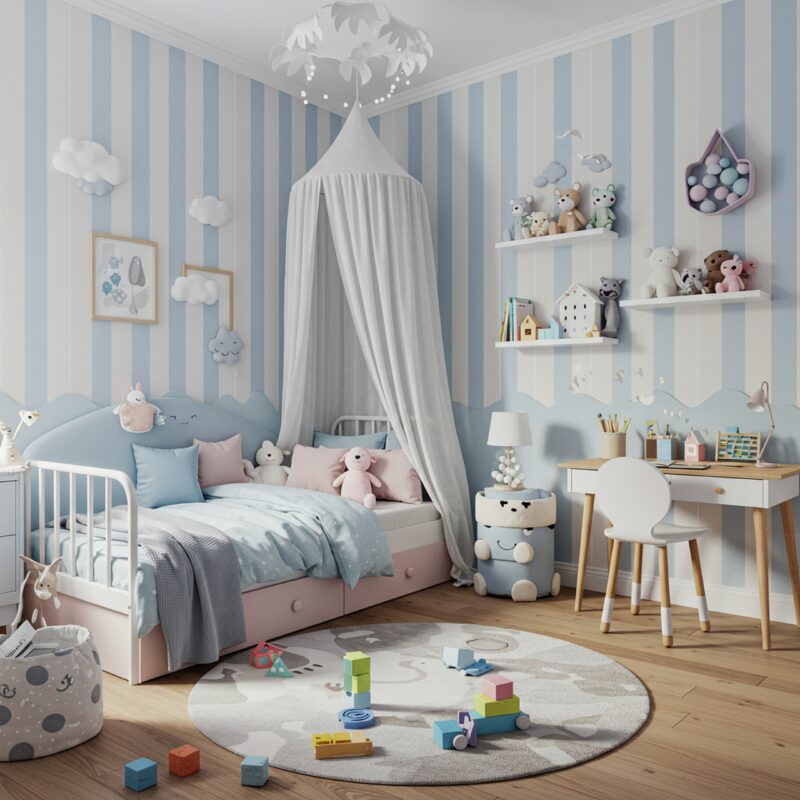
1. Stripes
Source: Vecteezy
Difficulty: Beginner Tools needed: Painter’s tape, ruler or level, two or more paint colours, roller or brush
Stripes are one of the most versatile wall patterns available — adaptable to virtually any interior style, from classic and regal to retro and playful. The colour combination determines the mood entirely: soft pastels for a gentle, feminine effect; bold jewel tones for something more dramatic; black and white for timeless graphic impact.
Beyond aesthetics, stripes serve a practical design function. Horizontal stripes make a room appear wider, while vertical stripes create the illusion of a higher ceiling — making them a particularly smart choice for Singapore’s typically compact HDB spaces.
How to achieve it:
- Use a spirit level or laser level to mark your lines in pencil
- Apply painter’s tape along each line, pressing the edges firmly to prevent paint bleeding
- Paint between the tape strips in your chosen colour
- Peel the tape while the paint is still slightly wet for the cleanest edges
- Allow to dry fully before applying a second coat if needed
Colour suggestion: Try alternating Venetian Blue (NP PB 2825 A) with Orchid White (1139) for a fresh, sophisticated nautical stripe — or Laughing Out Loud (NP YO 2422 D) with Snow Flakes (1164) for a warm, cheerful retro stripe.
Frequently asked: Do vertical or horizontal stripes make a room look bigger? Horizontal stripes make a room appear wider. Vertical stripes make ceilings appear higher. Choose based on which dimension you want to enhance.
2. Abstract / Freeform
Source: AI-Generated Images
Difficulty: Beginner to intermediate Tools needed: Various brushes, multiple paint colours, masking tape (optional)
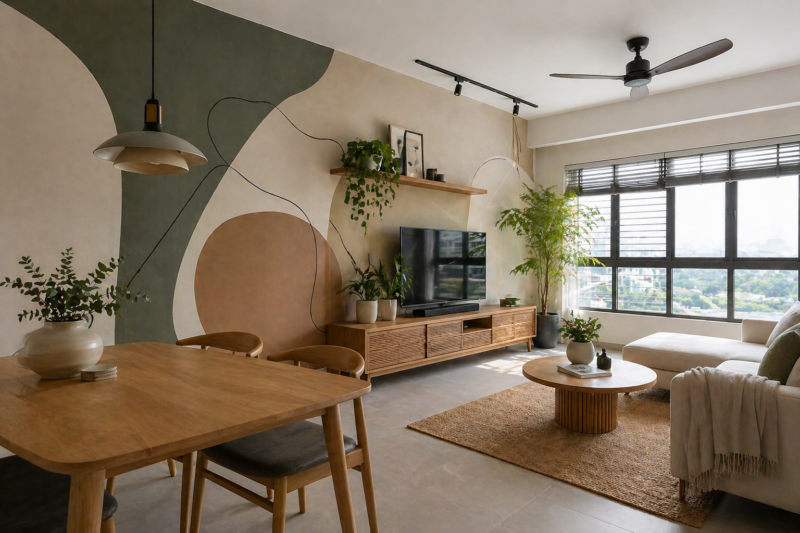
This is for the dreamers, artists, and anyone who finds strict geometry a little too constraining. Abstract painting is genuinely freeing — shapes, lines, symbols, and splashes of colour all come together to create something completely unique. The only rule is that there are no rules.
Abstract walls work best when they draw from the room’s existing colour palette — picking up tones from your furniture, textiles, or flooring — so that even a free-spirited composition feels intentional rather than random.
In 2026, abstract brushstroke walls have become particularly popular as a DIY alternative to expensive wallpaper — large, expressive strokes in two or three complementary colours create a genuinely gallery-quality feature wall.
How to achieve it: Begin with a base coat in your primary wall colour and allow to dry completely. Then, using a large brush, apply your second and third colours in bold, confident strokes — arcs, sweeps, or marks that feel natural to you. Step back frequently to assess balance and composition. Less is often more.
Colour suggestion: Try expressive brushstrokes in Bamboo Tile (NP BGG 2641 D) and Laughing Out Loud (NP YO 2422 D) over a warm Orchid White (1139) base for a bold, contemporary abstract effect.
3. Brick Stamp Effect
Source: AI-Generated Image
Difficulty: Intermediate Tools needed: Brick-sized sponge or foam roller, paint tray, base wall colour, brick-effect colour
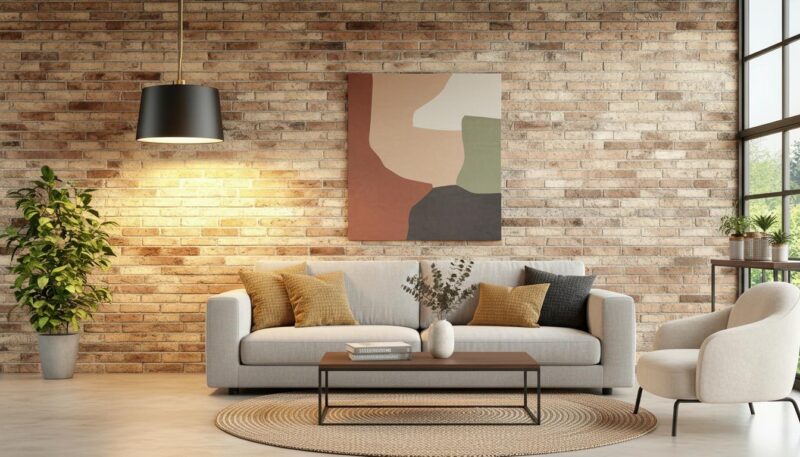
If you’ve ever admired the warmth and texture of exposed brick but aren’t able to install actual brickwork (especially relevant for HDB owners where structural alterations are restricted), a brick stamp effect is a clever and surprisingly convincing alternative.
Using a brick-sized sponge dipped in paint, you stamp the pattern onto the wall in the arrangement of traditional brickwork — offsetting each row by half a brick width. The result is a rustic, earthy texture that works beautifully in living rooms, dining areas, and feature walls in Scandinavian or industrial-inspired interiors.
How to achieve it:
- Paint your wall in a light base colour and allow to dry
- Dip a brick-sized sponge into your chosen brick colour (terracotta, warm beige, or red-brown work well)
- Stamp across the wall in rows, offsetting each row by half a brick length
- Vary the pressure slightly with each stamp for a natural, imperfect texture
Colour suggestion: Use Toasted Almond (NP N 3132 T) or Old Stucco (NP N 3133 T) for the brick stamps over a warm white base for a realistic earthy brick effect.
Frequently asked: How do you paint a brick effect on a wall? Use a brick-shaped sponge dipped in your chosen paint and stamp it onto the wall in offset rows, varying pressure slightly for a natural texture. Always start with a dry, primed base coat.
4. Ombre
Soure: AI-Generated Image
Difficulty: Intermediate Tools needed: Two or more paint colours in the same family, wide brush or roller, dry brush for blending
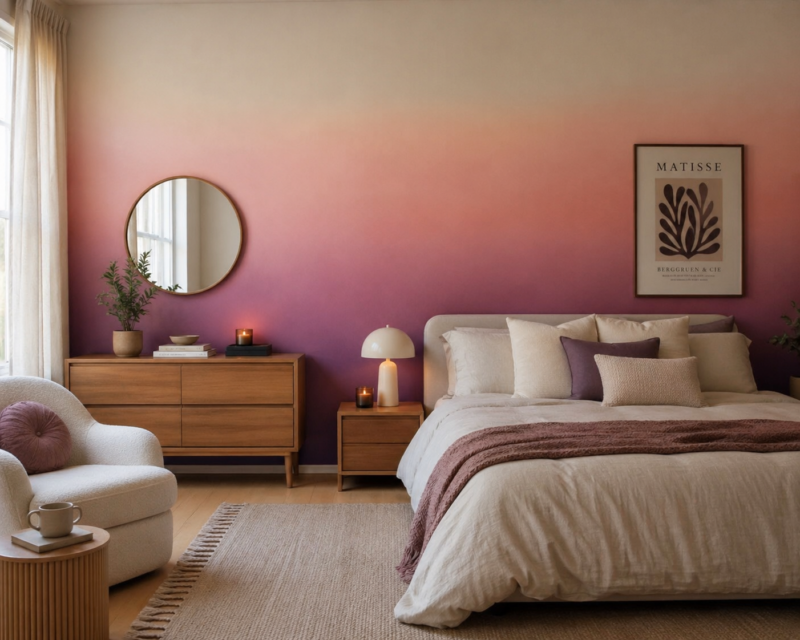
Can’t decide between two colours you love? An ombre wall lets you have both — and the transition between them is the feature. The graduated blend from one tone to another adds depth, movement, and a painterly quality that transforms a flat surface into something genuinely beautiful.
Ombre works best when you choose colours within the same family — light to dark versions of the same shade, or two adjacent colours on the colour wheel. The blending is done while the paint is still wet, so working quickly and confidently is key.
How to achieve it:
- Mark the transition zone with a light pencil line
- Apply your first colour from the top down to the marked line
- Apply your second colour from the bottom up, overlapping slightly at the marked zone
- While both colours are still wet, use a dry brush or clean roller to blend the two colours together at the overlap in smooth, sweeping strokes
- Work quickly — once the paint begins to dry, blending becomes difficult
Colour suggestion: Blend Misty Morning (NP PB 2877 P) into Bustling Blue (NP PB 2847 T) for a serene, sky-inspired bedroom ombre. Or try Elves Green (NP BGG 1608 P) fading into Sunken Forest (NP BGG 2635 D) for a lush, botanical effect.
Frequently asked: How do you blend paint on a wall for an ombre effect? Apply both colours while they are still wet and blend them together at the overlap zone using a dry brush or roller in smooth, sweeping strokes. The key is to work quickly before the paint begins to set.
5. Textured / Cement Effect
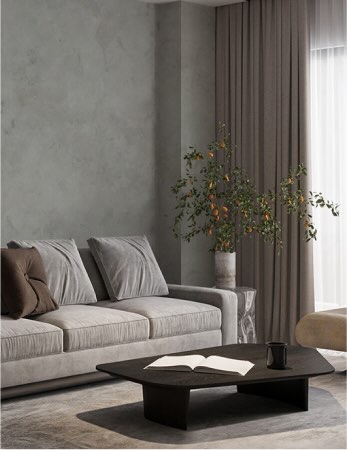
Source: Nippon Paint Singapore — Designer Series Cemento
Difficulty: Intermediate Tools needed: Textured paint or base paint mixed with sand, wide scraper or textured roller
Textured walls have an inherently sophisticated, industrial quality that’s impossible to replicate with a standard flat coat. The rough, layered appearance adds genuine depth and three-dimensionality to a surface — and in 2026, the cement and limewash effect is one of the most popular wall treatments in Singapore renovations.
For a DIY approach, you can either purchase ready-made textured paint or mix fine sand into a standard base coat. Applied with a wide scraper or a textured roller in irregular, overlapping strokes, the result is a one-of-a-kind surface with genuine tactile interest.
For a more refined and durable result, consider Nippon Paint Momento® Cemento from the Interior Textures range — a professionally applied concrete-effect finish that requires no actual cement or structural work, delivering a sophisticated, gallery-quality texture that lasts.
Colour suggestion: Nippon Paint’s Interior Textures Cemento range comes in a curated selection of concrete-inspired tones. Explore the full range at nipponpaint.com.sg/interior-textures/collections/cemento/.
Frequently asked: How do you paint a textured wall at home? Mix fine sand into your base paint for a DIY texture, or purchase ready-made textured paint. Apply with a wide scraper or sponge in irregular strokes for a natural, uneven finish. For a more refined concrete effect, Nippon Paint Momento Cemento is a professional-grade alternative.
6. Chevron
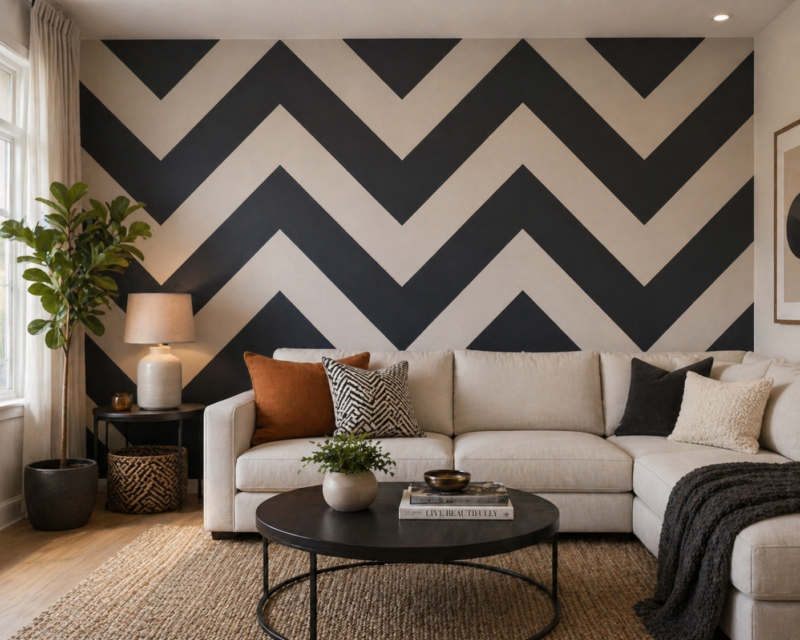
Source: AI-Generated Image
Difficulty: Intermediate to advanced Tools needed: Painter’s tape, pencil, ruler, spirit level, two paint colours
Chevron — the distinctive V-shaped zigzag pattern — brings a bold, graphic energy to any wall. More complex than basic stripes but equally achievable with patience and careful measuring, a chevron wall creates a dynamic focal point that works particularly well in living rooms, children’s rooms, and home offices.
The pattern stands out most dramatically when you choose colours that contrast clearly — a dark wall colour against a bright chevron, or vice versa. For a subtler result, use two tones within the same colour family.
How to achieve it:
- Sketch your chevron pattern on paper first to work out the scale and proportions
- Use a spirit level and ruler to mark the angles precisely on the wall in pencil
- Apply painter’s tape carefully along every pencil line, pressing edges firmly
- Paint the open sections in your accent colour
- Peel the tape while paint is still slightly wet for crisp edges
Colour suggestion: Halloween Night (NP N 3091 D) chevrons against Orchid White (1139) create a bold, graphic statement. For something warmer, try Party Time (NP YO 1225 A) against Toasted Almond (NP N 3132 T).
Frequently asked: Is chevron hard to paint on walls? Chevron requires more precision than basic stripes but is achievable for a careful DIYer. Accurate measuring and firmly pressed painter’s tape are the two most important factors. Sketch the pattern on paper first to plan your proportions.
Tips for Painting Wall Patterns Successfully
Always start with a primed, clean surface. Paint adheres better and colours appear truer on a properly prepared base. Apply Nippon Paint’s Odour-less Ultra 5102 Sealer before painting for best results.
Use quality painter’s tape. For any pattern involving straight lines, good tape is non-negotiable. Press the edges firmly with a credit card or putty knife to prevent paint bleeding beneath.
Work in good lighting. Natural light is ideal for assessing your pattern as you work — subtle inconsistencies in alignment or colour are far more visible in daylight than under artificial light.
Test your colours first. Paint a small test patch on the wall and observe it at different times of day before committing. Nippon Paint sample pots — available from authorised dealers and online — make this easy and affordable.
Use the Nippon Paint Colour Visualiser app to preview how any colour combination will look in your actual room before you begin. Download free on the App Store and Google Play.
Frequently Asked Questions About Painted Wall Patterns
What is the easiest wall pattern to paint? Stripes are the most beginner-friendly patterned wall technique — they require only painter’s tape, a level, and two colours. With careful preparation, even a first-time DIYer can achieve clean, professional-looking results.
Do I need special paint for patterned walls? No — standard interior wall paint works for most DIY patterns. For textured effects like cement or brick, you’ll need textured paint or a specialised product like Nippon Paint Momento Cemento. Always use a primer or sealer first for the best adhesion and colour payoff.
How do I prevent paint from bleeding under painter’s tape? Press tape edges firmly with a flat tool like a credit card. You can also apply a thin coat of your base wall colour over the tape edges first — this seals any gaps and prevents the accent colour from bleeding through. Peel the tape while paint is still slightly wet for the cleanest lines.
How long does a patterned paint wall last? A well-prepared and properly painted wall can last 5–10 years before requiring a repaint. Using a high-quality interior paint and a proper primer coat significantly extends longevity. In high-traffic areas, choose a washable paint like Nippon Paint EasyWash & Clean for easier ongoing maintenance.
Ready to find your pattern colours? Explore Nippon Paint’s full range at nipponpaint.com.sg/colours/find-your-colour/, or visit the Interior Textures range for special effect and textured finishes.
5 Ways to Keep Your Home & Family Safe from Dengue